Sunday, October 11, 2020

The Hidden Sadomasochism behind the Obsessive Rituals of Social Distancing

 As prime ministers and presidents, governors and mayors, doctors and patients, in the pursuit of "flattening the curve",  rush to close down whatever they can, and the rest of the populace not to be left behind join in this merriment, at least as long as it is happening to others as much as to oneself, one wonders whether behind the noble motive of saving lives there are not ignoble ones riding on its coattails. 

Even if such baser motives exist, you may want to ask, why think in those lines and weaken the resolve of mankind to wipe out this scourge, especially when I know for a fact that more rigorous the social isolation more rapidly the pandemic will end?

I have nothing against containing the virus as aggressively as possible, but when it begins to border on the absurd like a state governor telling family members living under the same roof to socially distance themselves from each other, or when the Wuhan Chinese, amongst whom the virus first emerged, start persecuting the African students in the region, ending their leases and forcing them to sleep on the streets, as if their black skin itself was the virus, or when my two secretaries lock the entrance to my medical office even when they know only three of us come through it - it is all telehealth now - as if the coronavirus will creep through an unlocked door faster than a locked one, or when the head of the security at my wife's hospital, who has been greeting her for 30 years, on her forgetting her keys and not having her ID badge on her person does not let her in the hospital with his master key, as if such harassment - her brown skin no doubt playing a role in it - will flatten the curve faster, or when one obsessional neurotic patient after another, tries to convince me that it is a man made virus, designed by the Chinese to get even with Donald Trump and in the very same breath tells that it is a Big Pharma in cahoots with Donald Trump that for he greatest financial killing of all time wants to vaccinate us all, with the vaccine  already in the vaults, waiting to be released at just the right moment and as icing on the cake adds that in the vaccine there will be a miniscule chip that will store our medical records and keep a minute-to-minute tab on our movements through 5-G towers, or when a hysterical patient tells that for three months before the virus emerged she was beseeched with dreams of flying over the ocean all the way to China and seeing her deceased father, chatting with those people there (did not clarify in Chinese or English), and when the virus hit the American shores the recurrent dream disappeared, clearly proving that it was an attempt on the part of her father from the beyond to forewarn her of the coming danger, or when my wife starts to instruct me as to how I should tell the police (I am a doctor) if I get stopped, as I prepare to leave my house to visit a rental property. which is an "inessential activity", and I tell her that I rather pay the 1000 dollar fine than abuse my medical privilege to lie,  and she comes back with "for a 10,000 dollars I bet you will,"  it is time to examine what lies behind these behaviors which basically are not so much driven by medical considerations as to make each other's life miserable. 

If the above examples are not sufficient to convince that behind the medical there are a multitude of other agendas, driven by schadenfreude,  let us consider the immense elasticity of the social isolation that I practice. I am more lax with women than with men.  With the former, if she impulsively moves towards me, abrogating the six feet rule, I am left speechless while I do not hesitate to sharply check a man if he invades that personal space.  And if the woman is young and pretty I am quite likely to forget even to don on my mask. A white man is more likely to be viewed as free of the virus while a black man, especially if he is burly and towers over me, I may reach for the gloves in addition to the mask. A person whom I dislike does not matter man or woman, black or white, I feel like wearing a hazmat suit in addition to the mask and gloves and the thought creeps up as to what social distancing would be like if it is made say a mile or longer. So the strength of social distancing has less to do with medical science than the attraction or hate we feel towards the person we are dealing with.  

Is hatred in humans more powerful than love? Hate definitely is older than love. The newborn, if he had a choice, would have nothing to do with the world, which, at least in the very beginning, he finds as an unwelcome disturber of the cocooned peace that he was used to until then. This was driven home to me with no uncertainty when I watched my nephew Derek Hall, four-hours-old, lying content and happy next to his mother, getting stabbed in his heel with a needle for a blood test, and as he squealed and opened his eyes in shock, the expression was unmistakable, "What the f*** is going on? What was that for? Why I am here? Whose idea is all this anyway? Why did you all poke me so cruelly? If this is the harbinger of what living will be like for I don't know how long I rather be beamed back to my mother's womb; adieus."

It is only gradually that we begin to love others and at first only those aspects of them that satisfy our needs. It begins with the mother's breast - which we probably see as an appendage of ourselves than a part of the outside world - gradually extending to her entire person. It does not matter if the caretaker is not the biological mother and the baby is bottle-fed, for the phylogenetic memories (what our ancestors did countless times for millions of years) patch up the ontogenetic gaps. The love then broadens to include the father and others in the household, as they increasingly share the responsibility of our care with the mother. And we begin to realize that there are aspects of the world that are not painful and violators of our peace, but whose appearance means relief from the tensions that relentlessly arise - hunger, thirst, wetness, cold, and other unpleasant body sensations. And the calming (pleasure) that follows from the abatement of these stimuli by these entities makes them deserving of love, not rejection. 
The next step we take is to start loving our brothers and sisters, rather unwillingly, and at first only because doing so earns the love of the parents and avoiding spells its loss if not outright punishment.  As rivals for the love and attention of the parents, and whose presence means less food and toys, they are an annoying nuisance; objects of intense jealousy, and, initially, we can find no good reason for their existence, for they do exactly what we were doing just yesterday for the parents' admiration; superfluous copycats. But that is not entirely correct, for when we see in them so much of ourselves, it compels us to share our narcissism (self-love) with them. The bond strengthens as they turn into readily available playmates and comrades-in-arm in our struggle to understand and master the world outside and the instinctual needs from within. They also provide us a template to model our behavior if older and to be a surrogate parent if younger. The march of love continues its stride, from the family to extra-familial objects - aunts and uncles, neighbors and playmates, teachers and impersonal ideals, and thence to the world at large.

But all this love is still on shaky grounds. It is not like the ever-expanding sphere of love keeps pushing the hatred out the window until we are full of love for the entire creation. This, of course, is what society, especially through the agency of religion, exhorts us to achieve, but we know with how little success. And the reason is not difficult to discern. Antithetical forces are in action from the very beginning. While others satisfy our needs, they also hurt and disappoint us. The mother's breast, while deeply satisfying, leaves a bitter taste whenever the nipple is pulled out. Other frustrations follow and knowing nothing but the mother at that stage, she is held responsible for every thwarting of our will. Whether she nurtures a lot or a little (often she has her own ambivalence and aggressive impulses towards us), we always have varying degrees of grudge against her for not doing enough. In cultures where babies are routinely breastfed, it is not uncommon for girls, even long after they are weaned, to complain that they were not given enough milk (love) by the mother in comparison to their brothers [and that is the reason they became the weaker sex; the reasoning, though, soon gets repressed into the unconscious]. This complaint that my mother's milk (love) was not pure pleasure but also a source of pain becomes the soil from which a number of eating disorders arise if the life trajectory does not go according to schedule. Fear of contaminants in food and water, eating of strictly organic fares, obsessive filtering or boiling of drinking water, religiously watching "bad parts" of food like gluten, egg yolks, processed meat, refined sugar, and in some eschewing meat altogether, all these fads at bottom are attempts to convert one's past passive and helpless feeding role with the mother to an active and controlling one, where the bitter aspects of the mother are rejected. Even the current obsession with wearing masks and taking so many similar precautions against the foul virus has as a secondary motive to block out all the negative aspects of the mother, allowing only the pleasurable ones, now projected upon the world at large which becomes a substitute for the mother.  In paranoid psychosis, this memory of the mother's love being admixed with hatred leads to the interesting delusion that the illness was caused by some trusted person secretly putting LSD or some similar poisonous drug in one's drink. Paranoid people's subtle rage at the world with the fantasy of annihilating it for being fed bullshit (poison with nourishment) by it was most amusingly portrayed in the movie Dr. Strangelove where General Ripper, convinced that America is being slowly poisoned by the Russians through the adding of fluoride in its water supply triggers a nuclear apocalypse. It is unclear if in Anorexia Nervosa also it is not this hatred/rejection of the mother (food) for not doing enough for one that underlies the illness. 

Even more painful than the nipple getting withdrawn from one's mouth is seeing it being put in a sibling's mouth, and we never quite forgive our mother for having other children, and instead of devoting all of herself to us, dividing it with them, her husband and her other interests. Soon the grudge extends to the father. He too disappoints us. He disciplines us, sometimes cruelly, and not just because the culture has brainwashed him into believing the doctrine of spare the rod spoil the child, but it is so easy to overdo one's duty if it entails exercising power over somebody much weaker than oneself. Furthermore, it seems that nature has its own agenda towards making father in some ways harsher towards sons than their transgressions justify. Cultural advancement depends in no small measure upon the antagonism between the generations. And mother and father both also earn our resentment when they favor or seem to favor some other brother or sister over us, even if it is done for short periods and done only to groom his or her competitive spirit. Our rejection sensitivity is so overarching that even a shift of attention from ourselves to another is sufficient to trigger a murderous rage.

During the Oedipal phase, the ambivalence towards parents enters into an entirely new dimension. Erotic love emerges alongside the affectionate one and is naturally directed towards the mother for she is the only truly beautiful one around. To make matters more complicated, it is coupled with a virulent hatred for the father. The emergence of this hatred does not mean the love for him ceases. It continues to play its role in the background, tugging the mind in two opposite directions. The hatred spawns myriad fantasies on how to get exclusive possession of the mother through getting rid of the father, and doing it in such a way that nobody would guess who did it - the basis of our species endless fascination with tales of triangular romances, murder mysteries, and perfect-crime plots. With the end of the Oedipal phase, these fantasies go into repression, but from the unconscious continue to be the fountainhead of literature, drama, cinema, and other arts. The projection of our evil intentions towards the father - it is not me who wants to kill him, but it is he who wants to do away with me - is the wellspring of all the bizarre and ingenious conspiracy theories. For while we are putting together a plan of action to do him in, we are also making preparations to defend ourselves from his anticipated reaction to it, and with time the defensive preparations become more elaborate and stronger than the plans to harm him. 

The fear of giant organizations like the Government, the IRS, the FBI, Big Pharma, even smaller ones like City Hall, one's Home Owners Association,  next-door neighbor, secret societies like the Illuminati, the Free Masons, abstractions like 5g-towers, Fate, they are all the result of this dread that the father is conspiring to kill us, having become privy to our treacherous thoughts against him. These entities become a proxy for the father because of their size, strength, and authoritarian mantle.  

But the oedipal phase is not all just about hating the father and loving the mother. There is the negative Oedipus Complex too - the craving for love and sexual satisfaction from the father and hatred and doing away with the mother. Since it is in direct conflict with the positive Oedipus Complex - loving the mother and hating the father - it is vigorously suppressed by the society's vested interest in cultivating masculine impulses in the male sex and opposed by the boy's own pride in his masculinity and the fear of it getting submerged by the feminine trends. The derivatives of this Oedipal hatred of the mother [strengthened by the discovery that she lacks the penis, which due to the eroticism at that point being almost entirely phallocentric, causes a severe devaluation of the female sex] transform into different forms of misogyny. The denial and rejection of passive erotic impulses, taking the role of the mother and abjectly submitting oneself to the father is handled by reactionary exaggerated masculinity (machismo), hair-raising bravado, logic-defying brinkmanship, pursual of dare-devil sports and stunts, arrogance towards authorities and gaudy masculine flamboyance. The projection of the hatred towards the mother (it is not I who wants her out of my way but it is she who wants to get rid of me) is the soil from which arises the dread of witchcraft, sorcery, black magic, voodoo, and other fears of female subterfuge, trickery, and duplicity.

While the content and the outcome of the Oedipal phase described above is from the vantage point of the boy, the girl's love and hatred towards the parents also undergo similar, though not identical, vicissitudes. Here also the hatred of the father is coupled with a love for the mother, and hatred of the mother conjoint with a love for the father. However, the processes are not exactly alike and not as well studied. We do know the outcome in the rough though. Her Oedipal phase begins too with erotic love for the mother and a hatred for the father but it comes to a roadblock on realizing that her fantasies cannot be fulfilled because of the inferiority of the clitoris in playing the active role in the relationship with the mother. Her love for the mother takes a big hit. She is filled with envy towards the brothers who will have an unfair advantage in loving the mother in the way she can never do and fury against the mother for shortchanging her.  She deduces, and correctly, the extent of the drawback she will face in the future because of this handicap. Thenceforth in her relationships with her own sex, behind the narcissistic love and pride for common feminine beauty and attributes, there will also be back-stabbing malice as a revenge for the underhanded betrayal done to her by the mother. The shift of love from the mother to the father, from whom she now expects to receive the penis (which soon transforms into the wish to receive a child) is also not free of ambivalence. Her first love, after all, was her mother and much of that love refuses to abandon its first dwelling place. The erotic love for the mother, and her own sex by extension, continue to exist in the background and all through life will undermine the attachment for the opposite sex. This homosexual love (attraction towards women) will often be projected upon her lover/husband (it is not I but he who lusts after this or that woman), and she will accuse her partner of having affairs with other women with or without justification. She may even drive them to have affairs. There are other factors besides this lingering homosexuality derived out of her strong attachment to the mother that will interfere with her ability to love heterosexually. The girl never quite accepts the genital injustice done to her, convinced that she once did have genitals like her brother, but because of some naughtiness on her part, they were violently mutilated. The dysphoria that women display during menstruation, besides the hormonal causes, is due to the rage generated from the memory (even though in actuality it is a false memory and not even present in the conscious mind beyond the Oedipal period) of such a trauma. Somatization Disorder, where the woman cannot tire of complaining of body aches and pains, caused by multitudes of illnesses festering within her, also perhaps arise from the false memory of a painful castration that she feels she was subjected to before she became properly aware of her self and her surroundings. Women's fascination with crime dramas like Forensic Files, biographies of serial murderers, especially those rare females who serially poison their victims, arises from these revenge fantasies of having suffered genital mutilation. Growing up experiencing humiliations and other disadvantages because of her sex, she becomes hyperfocused on men's defects and their follies, always quick to point to their missteps, and in some marriages all the woman does is to criticize her husband from dawn to dusk and sees to it that he gets no pleasure out of their relationship. Behind the constant complaining lies just one gripe - an appeal to the world to notice that it is my husband who is the defective one and deserving of genital mutilation, not me, and I should be in his shoes and he in mine. This complaint that I have been unfairly treated accompanied by scapegoating of some random person or organization as the cause may result in others taking up the cudgels against the targeted one, especially if the woman is exceptionally pretty and hysterical (a drama queen). Many great family and community disputes occur because of this grudge in the woman for her lover and a good example of it would be Salome's request for John the Baptist's head on a platter (beheading as a quintessential symbol of castration). The enigmatic nature of women, which men cannot complain enough about, also lies in this same complex, in that she helps her man with one hand and undermines him with the other. She helps because she identifies with his ambitions - her own ambitions dependent upon his success -  but on seeing that he is fundamentally no better than her and undeserving of the superior role in the partnership, she acts as his enemy, cutting his leg from under him in small and big ways, subtly and overtly, from mild uncooperativeness to taking up the knife and outright castrating him as Lorena Bobbit did. Sudden switches of women's mood from loving and friendly to "bitchy" and contradictory owes to the same complex. This vengeance of women for being the second sex, the one who has to play the passive subordinate role only because of her biology and which generates different degrees of rage after the intoxicating sex act is over, is best illustrated in Euripedes's play Medea. Medea after loving her husband Jason for a period, and only because Aphrodite instigated Cupid to strike her with his arrow (mythological depiction of how the rise of sex hormones can override the antagonism between the sexes), on seeing that he wants to bring another woman into his life, kills their two sons and through that grievous act him. That it was a revenge for her belief that she was violently castrated in her early childhood by her father is supported by the storyline that she kills her brother and King Pelias (a father substitute) by cutting them into pieces. As the Hindi saying goes, "Triya charitra koi naa janey, khasam maar, sati ho jaye" (woman's character no one can fathom, will kill her husband and then jump on his funeral pyre to be a sati). One of my patients agreed to marry her boyfriend only on the condition - and mind you this was after years of dating him - that she be allowed for three months to go wild and sleep with whomever she felt like before she could accept his proposal and left for California from Detroit so that she could do so with complete abandonment. Behind it was her rage that if I am going to marry him and be subordinate to him as the wife, which is unfair for I am superior to him, I should make up for the injustice by making myself less valuable through sleeping with other men besides him, and also enjoy a wild sex life that traditionally has been the prerogative of men, even if for just three months. On being asked whether such sowing of her wild oats would hurt the success of her marriage, she replied no it is better for me to get even with him now than to hurt him and the marriage by cheating on him once we are a family. Many a woman marry much below their social status to take vengeance upon their father and brothers for acting superior. Many interracial marriages, besides finding a partner whom one can treat as inferior, discharge one's aggression upon him with less fear of retaliation and perhaps find a way to steal his penis with less difficulty, are motivated by the same complex. A refusal to marry someone of the same background as oneself out of anger for the family constellation of one's origin where one was treated like a second class citizen.

The ambivalence towards siblings and non-family members is much more straightforward. Love for siblings mostly forged out of fear of parents is further tempered by the realization that they are our competitors in every way. They steal our toys, they malign us to exculpate themselves, they bicker, they argue, they fight, and they upstage us whenever they get the chance. But then there are always such endearing similarities between one's siblings and oneself that one cannot help but invest some of one's narcissistic love in them. People outside the family first become worthy of our attention and libidinal ties while acting as substitute family members. Later, as our critical faculty awakens, we cannot help but realize that our parents, who once appeared to us as the most beautiful and wisest of all, are really quite ordinary Joe Blows. To punish them for the earlier overestimation, for a while, we shift our filial and fraternal devotion and loyalties to outsiders, convinced they are more worthy of emulation. A church-going suburban all American kid may suddenly join the ISIS, a girl with midwestern values may become francophile and dropping her earlier resolve to become a physician move to Paris and make speaking French like the native her primary goal in life.  However, we soon learn that outsiders do not reciprocate the love with the same sincerity and have little or no scruples when it comes to taking advantage of us. They definitely belong to the troublesome outside world more than the family members do. Then the outsiders, by their sheer numbers, become a constant source of narcissistic humiliation. There is always somebody out there better than we are no matter the area in which we match our ability against his.

The original hatred of others, therefore, never quite dies down no matter how much love blossoms between us and the world. Even with the advent of puberty, when there is a tremendous surge of sex hormones, and thus everything regardless of its defects and shortcomings becomes attractive and we are pervaded with the spirit of love, altruistic strivings and socialism (the basic psychology of which lies in the impetuous juvenile demand for the right to make love to anybody no matter what their socioeconomic status), hatred goes into hiding only temporarily. It continues to smolder in the subterranean, ready to erupt whenever there is a breach in our love relationship. Even after the deepest carnal love, where all boundaries between self and the loved one are dissolved, once the ardor is satisfied the ego feels the pressure to repudiate the other for self-assertiveness. In fact, the more attractive the loved person and the more fervent the love, the greater is our hatred right behind, as if to prevent us from getting too blinded by the passion. The greatest lovers are the greatest adversaries. This may explain why people who are deeply in love have the most tumultuous lovers' spats and when they divorce they behave like Kathleen Turner and Michael Douglas in the movie War of the Roses - they rather kill each other than give up their attachment now tethered with pure hatred.

I seem to be spending way too much time describing the struggle between love and hate towards fellow beings than on how it is shaping the pandemic, yet it may not be out of place to examine further the vicissitudes of hatred as it compromises love. Many of us cannot even talk with loved ones without an unpleasant tone of voice or without subliminal contempt, teasing, and bullying. Many families cannot converse but through screaming at each other. While in most of us there is time to love and time to hate, in some of us the love and the hate cancel each other out, making us emotionless (alexithymic). Many marriages after a while become asexual. All the hurt feelings from years of negative exchanges leave so much unexpressed hate that it can only be contained by withholding sexual love from the partner. Finally, every sling and arrow that life throws our way provokes an immediate impulse to wantonly destroy - the primal aggression - without taking into account whether that means a frustration of sexual satisfaction or of the satisfaction of self-preservative needs in the future.

Now that we have taken a survey of the extensive and complex origins of human hatred and have developed an appreciation of how strong it can be, it should not feel too strange when I make the claim that the embracing of the Coronavirus shutdown is as much driven by medical prudence as by finding in it a great opportunity to release the bottled up collective aggression of mankind. 

The human species currently is at the high watermark of malcontent and resentment because of the changes in the cultural standards of the last century that demand far greater renunciation of aggression than humans are capable of. All through history whenever we felt that the aggression seething within the group that we belonged to needed some letup we started a tribal squabble with some other group, which, as we became larger units of religions, ethnicities, nations, etc., evolved into wars with similar neighboring units. When travel to distant lands became a reality,  colonization and the treatment of the subjugated people as second class citizens turned into a good way to rid the surplus hatred. With the horrifying carnage of the two world wars and the advent of weapons of mass destruction, wars as a way to get hatred out of our systems have become impractical.  An equally grave injury to our time-honored ways to release aggression from our systems has been the new cultural demand that prohibits picking on each other on the basis of sex, race, color, religion, and national origin. With all these modes of discharging aggression blocked, there has been a paralyzing effect upon our capacity to love as well. Love and hate are like two entwined snakes that keep a check on each other's movement. Only when one of the two finds a discharge through some change in external circumstance or internal neurochemical balance does the other one finds an outlet too. This phenomenon is best seen in many marriages where the couple can make love only after a good fight. It may be worth mentioning in passing that by making all forms of aggression between married couples domestic violence, modern culture is destroying the institution of marriage.  Marriage is not only about having guaranteed sex but also a guaranteed whipping boy. 

This principle that love and hate hold each other back until one gets a sudden unexpected discharge explains why the Roaring Twenties could only occur after the massive bloodshed of the First World War, and the sexual revolution of the Sixties was an attempt on part of the baby boomers to put scabs on the wounds of the Second World War, aided of course by the wish to reverse the trauma of witnessing through television (as if one were right there) the daily killings in Vietnam.

It may not be too farfetched to claim on the basis of how love and hate are interlocked, and the release of one brings the release of the other, that the Iraq and Afghanistan wars gave birth to the Arab Spring; that the 9/11created Homeland Security and its byzantine procedures (which incidentally have less to do with the catching of terrorists than with the expanding the power of the government, creating a department that does nothing but pseudo-work, and above all forging a new means to humiliate people). However, this circumscribed and subtle bullying never crossed the critical threshold that leads to provoking a massive counter hostility, and to the subsequent outpouring of love to balance it.    

The world had to wait for the Coronavirus to provide that vent for the hatred that had been accumulating for decades with no Vietnam War, no Desert Storm, and no Cambodian Killing Fields happening. In its basic style, it is an extension of the sadism that Homeland Security practices at the airports. Even the recorded messages that one hears every few minutes at Kroger and Home Depot and other superstores as to how we must wear the mask, wash our hands, cough and sneeze into our elbows, stay safe, stay healthy, stay six feet away, have the same patronizing tone and the attitude that you all are idiots and this message must be drummed into you every five minutes, 24/7,  that is blared at the airports. The uselessness and redundancy of checking people's temperature - in a hospital ER where a patient of mine works, he tells me, every time he goes in and out of the building, which he does a dozen times a day for he is security police, his temperature is checked anew - is modeled after the same subtle abuse practiced via airports security rituals. When we don the mask, glower at those who don't, get disturbed when others forget and cross that hallowed 6-feet line, refuse to shake hands, tell friends no we cannot accept their invitation and sorry we do not want them to drop by, pay more attention to rubbing the sanitizer on our palms than what someone is saying, they are all microaggressive messages as to how I rather not be dealing with you.  Of course, we don't go so far as to tell the other to get out of my face, don't touch my belongings, don't touch my food,  don't gross me with your bad breath, nevertheless what we are telling others to do in the name of preventing the ravages of the pandemic, comes quite close to it. The cruelty practiced through frightening each other as to what the virus will do through permanently affecting one's smell, taste, brains, lungs, cognition etc., with the aim of limiting each other's mobility - one mother jealous of her 21- year-old daughter's blooming sexuality and budding independence banned her from seeing her boyfriend but once a week instead of three times which was the norm - is less based upon the lethality of the COVID virus than the degree of jealousy we harbor within us. A patient of mine who is in his early seventies, but still vigorous and lively, complained that since the virus he has been virtually imprisoned by his family. They won't let him leave afraid the minute he steps out he will catch the virus and before you know he will be dead.  He lives alone.  He has not interacted with anybody in months. The family. afraid that they will cause his death if they enter his house, talk with him via cellphone from the driveway. He calls them weirdos and their concerns a pretension.  "I was their inconvenient father, who had to be visited as a necessary evil, thanks to COVID now they are free of that obligation.  How little they want to visit me is an indication of not how much they want to protect me from the virus but how much they want me dead so they can be free to live their lives without any fear of my disapproval."  

Even in normal times besides the affection and camaraderie that we feel in the company of others, there is always a counter impulse to tell them to get lost. Granted this impulse rarely breaks into consciousness while the person is there, emerging only in muted hostile thoughts after he leaves or less directly by feeling slightly irritable, or through the impulse to indulge in displaced motor actions like lighting up a cigarette, obsessive straightening of objects or pacing. But it is an impulse that is ubiquitously present no matter how fond we are of the person in general. Now, with the pandemic, we can discharge this antithetical impulse in-your-face instead of behind your back; and what is most wonderful, indulge in this antisocial impulse without a trace of guilt. In fact, we can feel good and moral in doing so. And this is accomplished through exclusively focusing upon the idea that it is being done for the other person's and community's sake. The other person has no recourse but to accept it as such, too, and ignore the underlying malice because of all the loud proclamations being made "stay safe, stay healthy, drive carefully, etc." 

The people who have found the greatest bonanza from this pandemic are the OCD folks, and we are all OCD to varying degrees. The obsessional neurotics are troubled by their aggressive impulses. The source of this aggression is the resentment that builds inside us from years of our will getting thwarted at the crossroads of life, giving rise to wishes and designs for others' death. It is the obsessive-compulsive part of our nature that keeps us glued to the TV, fascinated as to how many got sick and how many died, locally, nationally, internationally. And when not tethered to the TV we are checking these morbid statistics on our smartphones, keeping up on the latest like the sports fans do with their favorite players'  scores. A patient of mine who rushed from one TV channel to another all day long to know anything and everything on the subject of COVID ostensibly to keep herself, her children, and the world protected, confessed that behind it must be the desire for their destruction because while doing so she had to keep clutching her hair strands, sometimes pulling them out in clumps, to prevent her dear ones coming down with the virus. As she showed me the bald spots on her scalp she said: "while I can relay the stats on COVID probably better than Anthony Fauci, and keeping a continuous tab on the numbers keeps me calm as if I have got the virus by its tail, I cannot turn a blind eye to the fact that deep down there is a satisfaction from savoring those numbers of millions dying while I am triumphantly alive."  

Now the obsessive-compulsive not only enjoy others' suffering and death they take responsibility for it too. It arises from the guilt generated from their death wishes coming true. As the guilt accumulates they start quivering with fear whenever disaster happens no matter how remote from themselves. Even if they live in America while deaths are occurring in Brazil overestimating the power of their thoughts to affect others, they take the blame for the telekilling. OCD people, therefore, are big into expiation of the troubles they believe they are authors of. Like Lady Macbeth, they wash the blood of others from their hands. But their handwashing is not just repentance and penance for the past misdeeds but also to prevent it from happening in the future, especially from germs they will introduce and contaminate others with. Excessive washing of hands soon spills into stopping shaking the hands of others, the checking and rechecking of stoves and doorknobs, and in extreme cases, the touch phobia gets so strong that, like Howard Hughes, the world's most famous agoraphobic, they lock themselves in some hole and refuse to have any contact with the outside world. 

These OCD behaviors thus far have mostly been objects of ridicule. The endless rituals and obsession with numbers, counted in some symmetry, to prevent death, was looked upon as silliness. But with the pandemic things have changed. The OCD folks are now gloating with superiority. Their fear of germs, after all, was not neurotic but scientifically justified. They can look contemptuously upon those who only recently have come into the fold as Johnny-come-latelies and take satisfaction in seeing everybody else also suffer the same restrictions that they have for years without reward. They have also begun to invoke the psychobiological reasoning - it gave evolutionary advantage the catch-all and practically useless answer for every human puzzle: - as something our ancestors did more than the competition and therefore we became humans. 

This contention, however, is a bunch of nonsense. Neurosis does not bestow any evolutionary advantage. On the contrary, it hampers our chances to reproduce. Obsessive-compulsives not only fear causing death by touching, but touching also has another meaning to them, and one that is no less momentous in derailing their life goals and having children. In their unconscious, all touching starts signifying sexual touching. The process is interesting and deserves elaboration. Because of their extremely competitive nature, sexuality of those suffering from OCD, regresses from genital, where it has to best others, to the anal-sadistic level, which being auto-erotic takes away the tension of competition, seeking discharge through coprophilic drives. The ambivalence towards seeking satisfaction through pregenital sources results in the compulsion to avoid touching anything that can be associated with feces and the anal zone. Soon the person spends lesser and lesser time in wooing and mating in favor of washing hands, cleanliness, and avoiding all forms of contact. The more civilized and obsessively clean a culture becomes, the more repugnant its members find the sexual act, and even having and bringing up children because of the latter's messy ways. So there is no evolutionary advantage for the individual or the culture to embrace OCD ways.

The running away from the emerging sadomasochistic sexual drives in the  OCD has another interesting consequence. First, sex becomes off-limits and then other forms of pleasure meet the same fate. And since misery loves company, what becomes forbidden to them they want it to be denied to others, too. OCD folks at heart are killjoys and are having a field day in this pandemic. It does not matter if they lose out too with there being no activity, no enthusiasm, no triumph, no romance in the world as long all this is happening to others as well. The closing down of courts, reducing store hours, subjecting people to endless rituals before giving service, sometimes denying services altogether, postponing elective medical procedures, are all less dictated by safety concerns than finding in the pandemic a justification to frustrate and delay others' needs. Not unlike how the financial industry in the name of protecting your privacy gives you a third-degree before doing the thing that you asked in the first place. We can now be as much of a pain in the ass to others as we like as long as we can show it is at least partly arising out of concern for their own good.  

How strictly one is following the restrictions imposed or suggested by the authorities, and how scared to death is one of catching the virus - some don't open their home-delivered Amazon packages for two weeks and only after sanitizing the box with gloved hands - is a good indicator of the strength of one's obsessionality and unconscious hatred of the world. How enraged we feel at others who do not go by the book is another good indicator of one's obsessionality. Some of my OCD patients have not seen their parents even once in the last five months, so afraid they are of causing their death through giving them the infection even when they have hardly left their own house but for minimal periods, taking every precaution to avoid getting infected, and there is no possibility of their passing the COVID to their parents. It is this type of obsessive characters who are having the greatest difficulties in handling the pandemic. They are the ones who are getting morbidly gloomy, and dreaming of weird and scary dreams in the wake of the Coronavirus that the psychologists and psychiatrists are making so much fuss about. 

These pandemic dreams deserve some analysis. OCD people are constantly murdering others, or at least doing away with their existence, for the littlest of transgressions, not unlike how the Queen of Hearts does in Alice in Wonderland. She orders people's heads to be chopped off for the slightest offense. At daytime, these murderous wishes can only emerge as trying to be one-up on whoever crosses one's path, but in sleep and dreams, they can display their full intensity and glory. It is not uncommon to dream of suddenly being in a world where there are no humans left. A doomsday scenario where some nuclear catastrophe or alien invasion has wiped everybody out or the zombies have taken over the world and are annihilating all humans by turning them into zombies as well. The zombies are nothing but a projection of the murderous aspect of us. Zombies are us without our conscience (superego), our moral part, restraining us. The pandemic has made it possible for this fantasy to emerge out of our dreams and into the real world. One looks with secret satisfaction at the parking lots of malls which until yesterday were overflowing with cars and people, now ghost towns. The Obsessive-Compulsive's dream of doing away with all competition and getting one's hatred avenged is now being fulfilled in the real world. It is not surprising that while we lament at these empty streets, beaches, movie theaters, strip malls, we also find a subtle evil pleasure in the emptiness, in the fall of these mighty entities, in contrast to which we were nothing at all until yesterday. When we declare it is all so surrealistic, it is a euphemistic declaration of the feeling of depersonalization that emerges to cover up showing the joy at the mighty world's big fall, which would be so wrong to consciously feel with full emotional intensity. 

Coronavirus as a great equalizer deserves a couple of comments. With social distancing mandatory to all, everyone can be on the giving end. The pauper can tell the king to not invade his space and the Shudra (the untouchable) can tell the Brahmin (the pure one) whose touch phobia, like that of the Jews,  is so great, or at least it used to be, that even if the shadow of some low life (lower castes) who indulge in carnal pleasures with little restraint, fell upon him, he has to practice penance and social isolation for a prescribed period of time, to keep his germ-laden butt six feet away. At heart, we never give up the illusion that we are the ultimate human being who should be the model for everybody else to emulate. At the core of our being, we are superior to everybody else. Since the coronavirus does not discriminate between the rich and the poor, we can practice untouchability, like the holy Brahmin. Coronavirus has greatly disturbed the balance of discrimination between the privileged and the run-of-the-mill. 

And this may be the main factor behind the Black-Lives-Matter protest that arose as one of the reactions to the Coronavirus.  It is a grand attack on the part of the have-nots to bring down the well-to-do of the world who have become way too wealthy with the advent of computers and the Internet which allows money to move much faster than it use to and money always flows in the direction of the rich from the poor. Coronavirus lockdown served as a great way for mankind to get rid of its surplus hatred. However, it was quite one-sided in that most of the hatred was being discharged through the agency of the government disproportionately upon the lower echelons of society. While everybody was restrained from doing anything much it was financially impacting the poor more than the rich. The BLM protests and Cancel Culture movement ostensibly an outrage at the callous way in which blacks are treated in reality is an outrage at the way young and poor people, black and white, are treated. The young whites see in blacks the disenfranchisement present in their own lives. Society has become way too intolerant and is penalizing normal human foibles extremely harshly. For the smallest transgressions, the punishment that the establishment now wants to mete out is unfair. A DUI at the age of 17 or 18 can cost thousands of dollars and an inability to obtain a license for ten or more years and a handicap for life in career choices and advancement. A minor fight between husband and wife is sufficient grounds on the part of Child Protective Services to take away one's children and all in order for CPS people to keep their business going. The power of the government, the rich and old of the society at the expense of the poor and the young has been expanding quite rapidly in the last few decades.  The young and the restless, living under the lockdown, their personal, economic, and sexual freedom restrained, unable to contain the rising counter hatred, found in the death of George Floyd an ideal opportunity to turn around that hostility from the poor to the rich. 


Thursday, February 20, 2020

Psychoanalysis of The concept of The Third Eye and why we celebrate Halloween and Zombies

The idea that human beings are capable of evolving the Third Eye with divine powers is not an uncommon belief among people who want to achieve success in life beyond the mundane and to achieve this aim are attracted to the paranormal world of metaphysics, esotericism, mysticism, eastern cults and religions, New Age spiritualism and sci-fi movies and literature.
What is the psychology behind this eccentric striving? For an actual third eye on the forehead - that is where it is usually depicted in its artistic renderings -  in real life would only appear creepy and arouse horror.
In passing it may be mentioned that the horror at anatomical anomalies arises from the castration complex. Even the medical and accidental deformities such as the absence of an eye or a limb, the strange and distorted body postures and gaits seen in mentally retarded, mental retardation itself, growths from tumors, prominent birthmarks, skin aberrations such as vitiligo/leucoderma, even freckles to the evenly tanned Indian, cause a queasy repulsion and at bottom because they symbolize castration. The imagery of actual castration fails to emerge into consciousness, indicative of the strength of the repression, replaced by just a shudder up the spine in the sensitive ones and some such thought, "there but for the grace of God go I, for look how much worse my fate could have been. I should be thankful for what I have been blessed with."
Why does deformity in non-genital areas remind one of genital mutilation? It is simple association. One type of injury reminding of another. The vision of mutilation on one part of the body, through displacement, provoking the more dreaded possibility. The fear of castration is so ubiquitously present in all human interactions and so pervasively shapes every facet of our relationship with each other and yet so completely and phobically denied in the conscious thoughts, that any mutilation or deformity is capable of provoking the affect associated with castration without the emergence of its actual depiction in the consciousness.
Now the mutilation of other parts of the body while dreaded is less horrifying than the actual castration. And it is this lessening of the fear by repeating the idea of castration in other spheres than the genitals that lies at the core of festivals that celebrate castration, the chief of which would be  Halloween.
That Halloween is at bottom a festival to abreact the fear of castration is further strengthened when one compares it to Dushehra, an ancient Indian festival, predating Halloween by thousands of years, and most likely its progenitor, for it is observed around the same time of the year as Halloween, where clay sculptures of demons, chief of which is Ravana, the ten-headed twenty-armed demon king, with super-sized canine teeth and protruding blood-shot eyes, are paraded through the streets and then laid to rest at the nearest expanse of water. All these multiplication and awesome enlargement of body parts being a defiant denial of castration by emphasizing just its reverse.
The macabre enjoyment from viewing mangled, grisly, grotesque bodies, whether depicted in Halloween attires and accessories, or in haunted houses, or in horror movies, arises from trying to obtain a mastery over the fear of castration. The fascination with cemeteries, zombies, ghosts, ghouls, goblins and gnomes is at bottom viewing castrated individuals who will attack and drag one, out of jealousy and vengeance, into the same fate as they have been unfortunately subjected to -  brinkmanship with castration.  Even our love for action movies to a large part owes its origin to the fascination with castration, where body parts (penis substitutes) are cut off or mangled. It is a revenge for subjection to the threat of castration during the Oedipal phase.
Anyway, coming back to the Third Eye. It cannot be a real anatomic event. No amount of spiritual practices, no matter how dedicated, can abrogate the laws of nature and the emergence of a Third Eye capable of making connections with the already formed brain and the preexisting pair of eyes has to remain a fantasy. A Third Eye, therefore, must be a symbol of the development of some other kind of ability which is akin to visual function yet distinct from it. 
What could be this ability that the seekers of superhuman prowess prize so much and which they believe does happen though very rarely and only with great efforts?
Let us turn to the two great ancient religions of the world, Egyptian and Indian, where deities sometimes are shown with a Third Eye.
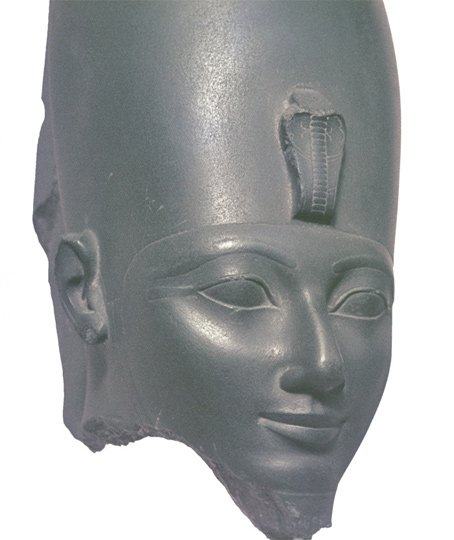
Egyptian Gods have the Third Eye at the same spot where often a serpent is shown darting out from a headgear. So behind the desire to awaken the Third Eye is there a desire to awaken some psychic force whose nature is similar to a darting snake?
Image result for pictures of Pharaohs with serpent head gearImage result for pictures of Pharaohs with serpent head gear
Serpents, especially cobras, play a prominent role in enhancing the power of the Egyptian deities.  Since cobra is a quintessentially phallic symbol, adorning them with it, is it a glorification of their phallic prowess? By showing the cobra specifically at the spot where the Third Eye should be is it possible that there is a connection between the power of the phallic energy, some coveted quality of cobras and the concept of the Third Eye? Let us see if such a view is confirmed by the Hindu religion and its mythologies.
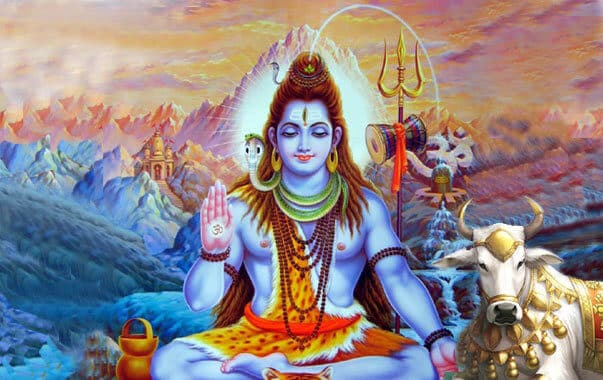
Attributes of Lord Shiva By PavitraJyotish

Shiva is undoubtedly the Hindu deity most often shown with the Third Eye, and never without the cobra with its prominent hood encircling his neck, and the Third Eye so powerful that if His ire is aroused its fury can instantly burn the disturber into ashes.
His devotees often harbor the ambition of acquiring the Third Eye as a boon from Him through Tapasya. 
What exactly is Tapasya?
It is a devotional meditation, usually concentrating upon a single favorite deity, but not necessarily so, and can be towards a few or towards Godhood in general, usually for something that one wants, which could be quite material, but most often it is for attaining an all-encompassing wisdom. The possibility of its happening, it is believed, depends upon the degree of asceticism practiced.  For example, while praying to the Sun, one may not breathe for so long that one may faint. Or one may stand submerged up to the waist in water for hours till all sensations from the body disappear. Or one may take a hatha yoga posture and stay in it concentrating upon the God from whom one wants the boon till he appears, a practice that may even lead to death. Buddha sat in a meditative pose for so long that the mud that had accumulated over his body had termites living in it and supposedly did not eat for 49 days under the Bodhi tree before the realization occurred to him that this is not the way to obtain Nirvana. Chandragupta Marya - a contemporary of Alexander the Great - took samadhi after abdicating his throne and died through starving himself (some variation of Anorexia Nervosa emerging as Tapasya). They are all forms of voluntary inhibitions of functions, especially motoric activity, something which happens involuntarily in depression, reaching complete immobility in catatonia.
What lies behind Tapasya? All forms of abstinence at the bottom are really refrainment from sexual satisfaction, with the sexual continence (brahmacharya) extending from genital sexuality to all forms of satisfaction. It is overdoing of not having sex into not having anything.
There is a belief that if I deny the body and mind gratification (self-mortification) it will be rewarded through obtaining something that will be manifold more than what is being sacrificed. 
Now the word tapasya is interesting. It originates from the Indu-European word root Taap which means heat in Hindi. The English temperature appears to be derived from the same word-root. If Tapasya means a method to generate heat, it, in all likelihood, is the generation of psychosexual heat from denial of physical sexual discharge.
The popular language recognizes a close connection between the rise of sexual tension and the affect of heat. We often say when a girl is suffused with sexuality that she is hot. A bitch is in heat we say when the dog is in her estrous phase. So tapasya is nothing but raising of the sexual tension (cathexis) through extreme continence, where no gratification is allowed through not just the genital but pregenital anal and oral phases of sexuality. The Jain nun barely eats. She is allowed to beg for food but has to stop after whatever she gets from the first benefactor for the rest of the day. To further block oral libidinal gratification she often takes the vow of not speaking which can be for hours, days, sometimes for years. Neither she is allowed pleasure in accumulating material goods nor in discharging the sexual tension through cruelty, practicing preservation of life (prevention of cruelty) to such an extent that she wears mouth-mask to prevent swallowing of microorganisms. So what the devotee aims through tapasya is to block the pleasure from sexual discharge not only genitally but from pregenital channels as well. Such blockage of sexuality multiplies its force like the dammed river.
But sexual energy cannot be held in check completely for too long without causing the death of the person as it happens in Anorexia Nervosa or iatrogenically with Neuroleptic Malignant Syndrome. It will search for some discharge somewhere. And if the Tapaswi (one who practices Tapasya) is not allowed to put the objects suitable for his sexual needs in a position favorable for the sexual act through physical action, his eyes, including his mental eye (the Third Eye), will scan every nook and cranny of his environment to find alternative paths to achieve his aims. He will look at the world and all aspects of it with a sexually jaundiced eye. It will watch the actions and the ways of fellow humans in a much deeper manner than he would if he was not in such a state of sexual pressure. Just like for the man with a hammer everything looks like a nail, the man whose mental eye is in extreme search for a conduit for the discharge of his sexual tension, everything will turn into a potential female sexual object, searching for a defect in them that can be treated as a substitute for the female genital, in to which the searching vision can dart into like the cobra darts into rodent burrows.
But we know the instinct to look and gaze is a component of the anal phase of psychosexual development. Now it makes sense when the mythology tells that if you cross Shiva His Third Eye, will turn you to ashes. The whole of his sexual energy will emerge in red hot cruelty and destroy you.
In short, Tapasya with the aim of developing the Third Eye is nothing but empowering the scopophilic instinct - the love for looking - in ways that would not be possible if they were not conditioned by extreme asceticism.
So behind the wish for the Third Eye is the desire to intensify the scoptophilic instinct - the love for looking or knowing - to the highest possibility. It is the wish for procreative energy instead of getting discharged in actual physical intercourse (direct gratification) into the wish to know everything about the sexual act - how babies are born - and since our attitude and behavior towards the world is modeled after our sexuality, extending from there to know the origin of everything.  It is at its core turning the entire libido's satisfaction into getting curious about the world. Scoptophilia at its core is a form of discharge of cruelty where instead of tearing apart the loved object with hands one does it with the eyes.
So arousal of the Third Eye is giving ascendancy to the scopophilic instinct over all other forms of libidinal expression. It is a form of perversion but the most sublime perversion, where the pursuit of knowledge trumps every other desire.
It is interesting the Shiva is also called Bholenath - the credulous, gullible, simple God, who trusts everybody and is ready to believe in everything. His symbol is Om, ॐ, which is a modified way of writing the number 3 Now number 3, per Freud, in dreams symbolizes the phallus - the penis with the two testicles. Shiva, in fact, is also depicted as an elongated black rock, recognized as phallus (lingam) by the devotees, on which symbol of is drawn with the fragrant paste of Chandan, and everybody looks upon it as Mahadev, the chief God, under whose umbrella and through him all other Gods discharge their heat. Hindus are thankful for Mahadev who through its medium, absorbs and discharges the Taap of all other deities, singing his praise in hymns for doing so.
But does not it sound like the sexual tensions arising from all other pregenital impulses are displaced and concentrated upon the Genital Impulse (Mahadev), which through its satisfaction/discharge brings mental peace to the humans?
Why Shiva is called Bholenath? Now we know a person who is sick with sexual tension, thinks with his penis (dickhead) and can be easily manipulated.  Shiva by extreme asceticism has all his sexual energy concentrated in his Third Eye and can be easily led by his devotees to be credulous towards the most outrageous things. And devotees who have more deviant aims behind getting favors from deities, choose Shiva over others, for he can be manipulated into granting boons which other Gods will immediately see as evil and not worthy of getting granted. Ravana, the great evil king of the demons, by hiding his wicked side, got Shiva to grant him the boon of immortality, by having 10 heads, each of which grows back the minute it is cut. This confirms the view that the nearest thing to death that humans can experience is the dread of castration (getting the penis/head cut off).
It is interesting too that Shiva's company is made up of the world's most outlandish motley crew. Not only Shiva when not in meditation hangs around graveyards/cremation grounds, where ghosts, spooks, spirits, ghouls, demons, and misfits of every kind, follow him - in fact, another name for Shiva is Bhootnath which means lord of the dead - his closest companions are Ganas, they are humanoid creatures with limbs that have no bones and which come out of odd parts of their bodies. They speak in the cacophony and appear distorted and demented beings. Now we are immediately struck here by recalling that they are similar to the folks with anatomical anomalies that arouse in us the horror of castration. 
So Siva's companions are castrated individuals at least socially. Which makes sense. It is fear of castration that forces people to abandon genital sexuality and then in the attempt to regain it their whole interest turns into understanding the nature of sexuality itself, generating the Third Eye in a lucky few, whose thirst for knowledge, scoptophilia, becomes the main, if not the entire conduit for the discharge of their libidinal energy. 

Wednesday, February 13, 2019

The Psychology of Laughter


Why do humans laugh?
One thing everybody agrees upon is that laughter is good for us. "Laughter is the best medicine,” we are told. It boosts our immune system, decreases stress-induced inflammation, releases oxytocin, and bonds people. Even listening to somebody else's laughter releases endorphins, a classmate of mine from medical school made this comment on our class's Internet site, and its members, all doctors, usually at loggerheads, all were in agreement on this one. It goes without saying that the members of this highly competitive elite group are always trying to be the funniest one, often posting jokes that had made them laugh as if to boost each other's endorphins.
Why does laughter cause all those wonderful health-promoting physiochemical changes?
This brings us back to the basic question: what is laughter?
To answer this we will have to go first to the smile. For smiling is the forerunner of laughter, appearing in babies shortly after birth. It is a fear reflex, triggered by random stimuli interpreted as slightly different from other sensations, and, therefore, because of the novelty, worthy of a reaction with a hint of fear. It is not a full-fledged fear response, but a sliver of it, limited to the pulling back of the muscles surrounding the mouth and exposing the teeth as a show of retaliatory aggression. The objection that the baby does not yet have teeth can be explained by the consideration that the reflex to signal aggression by withdrawing the muscles of the mouth is present even before the teeth appear.
The appearance of fear in the baby, no matter how slight, immediately provokes in its caretakers one of the most fundamental impulses of mankind: protect the helpless. As Freud1 put it: the original helplessness of human beings is....the primal source of all moral motives.
This moral impulse itself appears to be a reaction formation to an even more fundamental impulse - blind aggression upon the vulnerable. A real feel for this primal irrational aggression I fully appreciated in myself the other day when on seeing my handyman bent over doing some work on my house, with his back towards me, provoked a powerful urge to kick his defenseless behind. This aggressive impulse could be the same as the dread one feels on being asked to hold a newborn, afraid that one may dash the completely helpless thing to the floor. The exclusion of children from weddings, senior citizen housings, and other adult social get-togethers also perhaps arises from a fear that one may not be able to control one's impulse to discharge raw aggression towards the defenseless rambunctious hyperactive rug rats. Many a potential parent, who quite likely would have looked after his or her children no worse than others (perhaps better because of greater self-doubt) forgo parenthood under the sway of this impulse, afraid they will be terrible at it, if not through actual physical aggression, by maintaining an emotional distance to avoid acting out on the impulse.  It is interesting that they often make wonderful parents to pets upon whom they can freely shower the held-back love without fear that the ambivalence lurking behind will cause the animal harm. The dread of senselessly jumping off from great heights, like when one is on the ledges of the Grand Canyon, or crossing high suspension bridges like the Golden Gate Bridge, may also owe its origin to this same drive, however with a twist that the object of the aggression is reversed and directed towards one's own self. Self is treated as the helpless child and the immensity of the height treated as the potentially aggressive grownup. The great moral indignation some people feel over abortion also may be due to a detection of outrage in themselves over their failure to safeguard the vulnerability of the fetus, which interestingly is not felt so strongly by the woman who seeks it, or at least she is conflicted over it,  because she feels herself to be the more vulnerable one rather than the fetus which for her does not yet quite exist. This primal aggression perhaps is the most pure (minimally alloyed with libidinal impulses) expression of death instinct (Thanatos).
Let’s return to the nature of the smile. Showing a window of vulnerability to provoke the protective instinct in the caretakers and the other adults around the baby soon becomes a powerful social tool and almost "a magical means" to relate with and manipulate others. The fully developed smile response, with its ability to neutralize others' aggression towards one, should be regarded as the most important social feature the human species has evolved for its members to get along with each other. The smile is the primary lubricant of civilized behavior.
The next step in this developmental process is the emergence of laughter, alongside the smile. Laughter is the brake upon crying by the smile. Laughter is no more than crying punctuated by smiles. In rapid succession, crying alternates with smiling. Crying is a shriek for help emitted in distress, which readily occurs in babies because their level of tolerance for discomfort is very low. However, when crying turns out to be unjustified and the anticipated unknown fearful thing which should have brought pain, or at least a rise in the level of tension, turns out to be something pleasurable and familiar, the baby abruptly punctuates its crying with a smile. This punctuation of crying with a smile, when rapidly repeated, become peals of laughter. The baby replays the scenario of distress followed by pleasure over and over again as if to relive the trauma and the relief from it under the sway of repetition-compulsion, producing the characteristic sound of laughter.
That laughter is produced from a rise of distress/tension in anticipation of danger/harm followed by an abrupt relief because all that preparation was for naught is bolstered by the observations that mothers make their baby laugh by making funny faces (mock frightening faces) which after an initial brief period of fear and bracing for harm are recognized to be the familiar face of the mother. The same holds true for making animal sounds which are half frightening/half cajoling, where the threat is rapidly dissipated by the realization that after all it is not a scary animal but one's familiar mother; playing peek-a-boo where the distress of the mother's disappearance is quickly followed by her pleasurable appearance; chasing the baby where the fear of being caught, harmed or gobbled up by some dangerous entity is negated by the knowledge that it is one's harmless nay protective mother who is pretending to be that entity; and tickling where the aggressive act of the nail pushing through the skin which should cause pain instead gives the baby pleasure because the nail rather than hurting gives relief through the mechanism of counter-irritation (this pleasure from tickling/counter-irritation in its extreme form is one of the factors behind self-cutting). The confirmation of this biphasic mechanism behind laughing was even more strongly borne out to me a few weeks ago when I saw a young father playing with his two-year-old boy, dangling him over the parapet of a high deck, pretending that he was going to let him fall to the ground, resulting in serious injuries if not death, which the child, instead of finding it scary was finding it hilarious (or at least the fear was overlaid by the hilarity), making him laugh and laugh. Here the fear and stress of falling and getting hurt was activating the innervations that underlie crying which was being punctuated by the realization that the danger was only apparent and not real because his father loves him so much that in no way would he drop him to the ground below. It is no more than “just my father kidding me" which was activating the innervations of smiling, turning the combination of crying and smiling into laughter.
Theme Park thrill-seekers adhere to this same pattern as their roller coaster descends from dangerous heights. Because of the potential mortal danger, this should make them tense up and cry. Instead, they laugh, because of the realization that they will come out of it unscathed. The attraction of such joy rides exists because through this game of tensing up, expecting great harm and then finding a discharge for it by the realization it is not going to happen after all, one can also transfer and get rid of other tensions existing in one’s life/psyche.
Thus laughter occurs when one braces up, causing the brain, muscles, and autonomic system to tense up with a readiness to cry only to find that the tension and ratcheting up of the level of alertness was unwarranted. Laughter with its relaxation of the muscles around the mouth gives the signal that a similar decrease of psychic expenditure (tensing up to ward off potential harm) in the brain is occurring because what was expected is not what is happening. The smile, the mini-laughter, is the main tool humans use to ward off conflict when they meet strangers, as when passing somebody on the road, for it signals that I am relaxing the psychic tension that is building up inside me in preparation to defend myself or attack you.  I pose no threat and correspondingly gear down your own build-up of tension. We also smile at familiar people as well when we pass them to signal that there is no need to tense up for we are no strangers. But also we smile at the stranger in the familiar.  For just like we know our psyche only to what is capable of becoming conscious, we know the motives of even the most familiar only to a certain depth and no more and the closest of human relationships are not free of ambivalence. 
The greater the buildup of distress and tension before the realization that it was all for naught (false alarm), the greater the force of laughter (alternation between crying and smiling) and its duration.  For example, rolling on the floor laughing due to profound loss of muscle tone that extends through the body, with muscle tension plummeting so profoundly that it cannot support the erect posture. Such laughter sometimes is accompanied by a tear or two rolling down the cheek which bolsters the contention that laughter originates out of crying.
The person who has a gift for telling jokes uses this principle to first gradually build up a tense scenario with proper amounts of delay and sidetracking in the narration to incorporate more and more neuronal circuits of the brain into a preparatory action mode and when the audience is all keyed up, anticipating some grand action to resolve the complex situation, provides an escape from the tension but not with a solution which is commensurate with the dammed-up emotions but through some silly primary process2,3 logic or some primary process play upon words, like a pun or double entendre, or some incongruous comic behavior, bringing the realization that all the gearing up of the energy to act was unnecessary and the relief that occurs from not having to maintain that psychic expenditure anymore brings pleasure, and whatever tension was already in the system is discharged through the innervations surrounding the mouth. The process perhaps is not too dissimilar from the sexual act, where the built-up tensions from the exigencies of life find an outlet through sexual arousal and discharge through the muscles - including the well-recognized phenomenon of the curling toe - which first experience a rise in tension and then the release (pleasure/orgasm). As to why this discharge takes place through the regions surrounding the mouth and [usually] not elsewhere may be because those were the first set of muscles to become socially functional in humans and therefore are most extensively represented in the brain, and then the mouth is centrally placed, easy to observe by others, and, with its ability to make sounds of crying and laughter, most apt to communicate the increase and reduction of tension. Of course, not all the psychic expenditure (tension) that becomes superfluous and needs discharge can always find an outlet through the innervation surrounding the mouth. If it is quite high, the respiratory, abdominal, and peripheral muscles also are dragged into the process as when one laughs so hysterically that one can hardly catch one's breath, or when one's abdominal muscles go into convulsions (belly laugh), or when one gleefully slaps one's knee or the back of one's accomplice in delight, or when one involuntarily moves one's torso back and forth with the head thrown back roaring laughter.  
Laughter then takes the next step in its evolution, entering into its final and most important phase, becoming the key social process behind the ability of human beings to get along with each other. With the smile/laughter at the very bottom being fear response, it became an excellent tool to pair with aggression, signaling that while I am attacking you I am also afraid of you, and the twain when interwoven and expressed together, allows humans to interact with each other in the most nuanced fashions in every facet of their social life. Yesterday I went to a "Home Improvement Show" where the vendors were doing their best to get the crowd to stop at their stall and listen to their sales pitch. It was obvious their main hurdle was the natural hesitancy of the visitor to start listening to somebody that they had never met before. For unfamiliarity means danger and anticipation of aggression. And so what were the salespeople doing to signal they would not bite you if you let them speak to you? They were breaking into welcoming smiles to arrest your attention and make you stop. One woman with her painted blooming cheeks and liberally applied red lipstick on her petal-like lips, which allowed just the right amount of opening of her mouth, reminded me of the girls with their alluring smiles in the Red Light district of Amsterdam. One could not help but wonder looking at her pretty inviting face whether the mouth in humans has not become beside the organ of digestion a substitute for flashing sexuality through the smile.
 Human interactions are full of microaggressions. We constantly try to triumph over others not only because our success in life to a great deal depends upon it but because the innate aggressive drive of humans (Thanatos), the death wish, demands frequent acting out and discharge. As Freud4 put it, if we were given full play to our wishes one would take any woman one pleases as a sexual object…[and]…without hesitation kill one’s rival for her love or anyone else who stands in one’s way. Since this cannot be, for there are strong internal inhibitions (conscience) and dangerous external circumstances, humans have developed equally powerful counterbalancing passive behaviors to go alongside the aggression. Laughter appears to be the most ubiquitously used maneuver to signal this passivity, which softens the impact of the aggression perpetrated and lessens the possibility of retaliatory counter-aggression. Most laughing, perhaps 90 percent of it, is done for the softening of this aggression that we are constantly discharging on each other. Whenever we say something which we think would sound to the hearer as if we are not giving him sufficient respect, ordering him around, slighting him, demeaning him, outright insulting him, raising our voice at him, acting his superior, defying him - in other words if our words, demeanor, or actions will be perceived by the hearer as an act of direct or indirect aggression that will upset the balance of power between the other and oneself  - we soften its force by some appeasement that is done before, simultaneously or immediately after the aggression. A hint of a smile or small mechanical laughter, usually with little emotions attached to it, is the most commonly used gesture of this counterbalancing. It has become as specialized for showing appeasement in humans as wagging of the tail in dogs and purring in cats. Back and forth aggression in human communications is often so subtle and indirect, clothed in submissive jocularity, gestures, and allusions, that we often only recognize it as an act of aggression by the accompanying sly smile or chortle of laughter. A bipolar patient of mine who is plagued with having to constantly master a relentless stream of contempt and hatred for others, periodically apologizes for possessing such negative emotions by abruptly breaking into laughter in the loudest possible manner which serves the purpose of appeasement, and yet because of its explosive, untamed, hostile tone simultaneously discharges the aggression. His abnormal incongruous laughter, through which the rage breaks through, betrays the disturbance of his mind and his social crudeness. It is not the kind of laughter which invites others to join in, like the uncontrollable laughter that leaves the person helplessly on the ground where the aggression has been totally overpowered by the mirth and therefore the person feels no need to maintain any tension in his muscles and which invites others to sympathetically laugh along with and partake in the pleasure of complete passivity.
Much of the gracefulness of humans lies in how well a person can seamlessly fuse appeasement/smile with aggression, hiding the latter so well that even when he is taking advantage of others they do not detect it. In those whom aggression and appeasement are defused, which often happens when the anger/aggressiveness
far outweighs the desire to appease, the laughter appears odd, incongruous, and with a gap between subject matter that is being expressed and the laughter that is supposed to counterbalance it. If the gap between the distressing emotion that is being discharged - whether it is of anger, sadness, lamentation, pain - which would be stressful to the listener, and the laughter that follows to cover it up is too long, it indicates failure of the mechanism of laughter to adequately soften the impact of the dysphoric emotion. Macabre, black and sick laughter/humor are terms used for describing covering up of aggressive behavior or thought with laughter where in a more moral person outright suppression of the aggression would have been the appropriate course.
 Laughter is not just used to cover up (lessen the impact) of the distressing emotions that we cause in others. Distressing emotions caused in oneself by others, where one is the object and not the subject of aggressive exchange, also is often dealt with [tearful] laughter. Bitter laughter is how the language describes the method of lessening the impact and pain of such aggression with laughter. When one deals with adversity - where the aggression towards oneself is lethal or near-lethal through laughing, it is aptly viewed as a sardonic laugh or gallows humor.
Even when there is no other person on whom one is discharging aggression and one is simply conversing about a third party or describing some situation where aggressive action occurred, laughter is often added as an additional soundtrack, a facade, to hide one's enjoyment of the cruel nature of what one is narrating. For example, a patient of mine who drove four hours from Dayton to Detroit to make it to the session on time, could not be happier that he was driving on the Interstate going North, for on the other side a semi carrying chemicals had overturned and the traffic going South was blocked for miles. And he smiled first gingerly at their plight, as he recreated the scene of those who were standing still on the other side of the interstate while he was  sailing happily over the speed limit on his side, and then laughed as if to apologize for indulging in that perverse cruel pleasure (schadenfreude). This schadenfreude varies among people. There are those [masochists] whose aggression towards others is so inhibited that for its slightest manifestation they have to immediately apologize with a great deal of sheepish laughter (in teenage girls it manifests as giggling), and then there are those [sadists] who behave like the Rakshas (Demons) of Hindu mythology who while vandalizing, maiming, and killing, guffaw loudly, which is more a mockery of appeasement than appeasement. Children’s teasing  and attacking the vulnerable amongst them, which can get quite demonic, is often coupled with laugher, which as with the demons of Hindu mythology, where there is total lack of empathy with the suffering of the victim, also should be looked upon as a mockery of appeasement.
A patient of mine whose primary problem is masochism, and because of that despite coming from a good family and having a license in a skilled trade is always broke, while talking about his near-fatal boat accident, caused by an error of his friend, described how half of his face has been reconstructed with 27 plastic parts and thirty-six inches of wire, all the while flashing a fixed smile (character defense) which turned into frank laughter when he came to the part where the hospital, instead of saving his life, damn near killed him again when the X-ray technician lost control and dropping him on the CAT-Scan table, fracturing his rib and puncturing his lung. Here the smile and laughter had emerged to soften the aggression, but one should note that the cruelty was directed against his own self which he was enjoying by identifying with the ones who had caused him harm. The aggression rightfully belonged against the person who had caused the boat accident and the hospital personnel who had compounded his injuries, but unable to take it out on them he was taking it out on himself. But after lessening its full fury with laughter, because hidden behind his own self were the figures of his boat companion and the powerful hospital, who could potentially retaliate and therefore had to be appeased.
The way one's sense of humor lessens the pain of ill-fortune also is best understood if we view it as an appeasement of aggression in a convoluted fashion. A patient of mine told me that whenever something bad happens to her sister, she giggles and grins through it. When their mother was terminally ill and in great suffering, her sister's coping mechanism was to grin and laugh through every piece of bad news they received from the doctors. What she was doing was to take an attitude towards fate (Ananke) that no matter what bad thing you hurl upon me I will just laugh at that aggression of yours, treating it as something humorous, and thus not allow it to provoke painful emotions in me.
But why package laughter with aggression and make the process unnecessarily complicated instead of just notching down the aggression itself a few pegs? This may have to do with the need to express the full extent - or as much as one can safely do - of the hostility/anger/aggression one feels to get maximum relief, but which can only be done if appeasement is also offered simultaneously as if the whole thing has been done in jest and not worthy of counter-aggression. By the laughter, I tell the other person not to get so distressed or offended with my aggression that he or she is compelled to retaliate with such severity that it will cause me more tension than the relief I am seeking from discharging my aggression upon you. By the accompanying laughter one makes the statement: Please treat my aggression with kid’s gloves. Consider it as not entirely real and serious, and just like you would not retaliate against a child who hits you playfully, please indulge me in the same manner. And lest you miss the point that my aggression is being done to humor you, let me initiate the laughing even before you do so.
It may not be totally without value to add that laughter is not utilized just to make aggression palatable but also when we make fun of somebody, make a sly dig, or even make an allusion to stealing from them. Looking at a big insurance company check which I had just received, one of our office secretaries once remarked that it is only a matter of time before she is going to cash one and be on her way to Jamaica and then covered up the allusion to stealing with a hearty laugh to make sure that I consider it  a joke and give no weight to the underlying temptation to actually embezzle. On another occasion, after charging a patient his co-pay, she failed to hand him back his credit card and instead told him that he was all set to leave. When he would not, she glared at him until he pointed out that she had failed to give him back the card, at which point she broke out in an embarrassed laughter. Here the mistake was immediately realized by her, and by the patient as well, to be a Freudian Slip, and the laughter emerged to cover up the intent to steal his card, which also should be looked upon as an act of aggression. Comedy, whether on stage, in movies, in TV shows or in comedy clubs, heavily relies upon aggression directed towards authorities, which the actors and the comic execute while the audience cover up the full impact of the aggression by laughing and thus protecting the protagonist of the show (with whom they identify) from retaliation, and thus vicariously discharge their own pent up aggression against authorities. Mr. Bean, the English disruptive comedian, is so popular because he goes around discharging his aggression towards the world at large by doing things the way a child would, rejecting the claims of reality and proceeding under the sway of the  primary process, which leaves us no choice but to laugh at his immature oppositional-defiant antics instead of punishing/inhibiting them. We also laugh because if he can get away with that kind of childishness why should I keep myself fearful and tense with my defenses up. I can relax, decrease the psychic expenditure on my neuronal networks and muscles, and discharge the liberated energy through laughter, secure in the knowledge that if any societal (and superego) castigation falls it will be upon that clown not me. Our laughter at other’s foolishness is owing to our superego’s relaxing its iron grip upon the ego to always behave ideally, for now its attention is deflected upon the comedian with his primary process (stupid/funny) behavior allowing for the ego, unshackled from being watched, to relax momentarily. To put it another way, though using more technical terms, observing someone using primary process for fulfillment of a wish (an extreme though a rather crude example would be giving into gastrointestinal relief by passing gas loudly in the midst of a solemn church proceedings) allows one to decathect one’s own secondary process inhibitions, with the freed energy finding discharge through laughter. Putting it in yet another way one can say that laughter quite often is due to a momentary deflation of the self-elevation (sense of superiority) which the ego feels at keeping one’s secondary process guards up (puffed up with self-importance) on observing someone using primary process thinking or behavior in defiance of the demands of societal and superego standards. While any primary process activity or logic is capable of bringing a smile to the face, the uproarious laughter occurs only on perceiving primary process shortcut outright triumphing over the elaborate secondary process in achieving the wish fulfillment. When Laurel and Hardy get mixed up with the matadors and Laurel does an astonishing job of killing the bull with his primary process reasoning and actions, it has us rolling on the floor with laughter.
Laughter and smile as a tool to sugarcoat aggression and other mean behaviors alone would not by itself bring the great physiochemical changes that we talked about at the start of this essay, and which supposedly bring so much health benefits. There has to be another element. It appears that laughter over time has evolved into not just a tool to show appeasement, but through that appeasement also find discharge for passive sexual trends.
Now our muscle tension, along with the skin, is the protective barrier that guards our vital organs from external irritants/aggression. If we anticipate aggression/attack, our muscles tense up. The defensive muscle wall that envelopes us has evolved to protect the core part of us, our essence, our vegetative system. So when we laugh, it is signaling to others that perceive no threat. I am dropping my guards and making the vital delicate part of me, which is more valuable than my outer shell, vulnerable to you. Consider my laughing as a signal that there is no tension between you and me. I am being passive and opening up to you. It is not different from the way dogs to show submissiveness to their master go down on their back and expose their chest and belly. Dogs go belly up; humans laugh. Both are acts of appeasement, signaling one’s lesser status. [Incidentally, this may explain why women laugh, or at least the young ones giggle, more than men, and why smiling and laughter lessens as one rises up in social hierarchy, with guys at the very pinnacle of their life trajectory often becoming grumpy old curmudgeons. According to one account (Osho, the Indian Sex Guru of Oregon), Jesus never laughed [for he had no aggressiveness towards anyone and therefore had no need to appease]. 
It may not be without merit to digress a little and throw light upon a social phenomenon that my medical school classmates were recently discussing on our Internet site.  They pointed out to me that since the Sixties, when posing for a picture, instead of looking stiff, solemn and proper, bordering on the melancholic, people now flash the broadest smile, cracking their mouth from ear to ear. This transformation perhaps has to do with our greater tolerance towards showing our passive softer sexual side to the world because of increasing global prosperity. In yesteryears, the portrait painters and the photographers tried to capture a man’s strongest aggressive self, making the statement that here is a person who is no milquetoast but a force to be reckoned with. Likewise, in portrait of a woman, they made sure no smile crept up on the face lest people suspect the presence of salaciousness in her character. Smiling was a no, no, which only the vulgar, the weak, the spineless, the sycophantic, the lewd quickly gave in to. With everybody having so much more to give now, people want to show in pictures how well off and happy they are and do not have as much fear of showing their windows of vulnerability, their softer side to the world. 
Now the peculiarity of the appeasement via laughing is that it contracts the muscles surrounding the mouth and gives a glimpse of the red mucosal lining of its inside, exposing the softer, the vital, the more essential part of ourselves. It is an act of making the defenseless flesh, unprotected by skin and muscle tension, vulnerable to others.  But isn’t that exactly what a woman does when she offers herself to be made love to, exposing the red mucosal lining of her genital passage by withdrawing the sheaths of covering clothes, skin and protective muscles? Human beings, or for that matter all living organisms, are composed of the inner core, which is the essence of our being, and in which all vital processes, including reproductive activity, occur, while surrounding it is the shielding outer husk of the skin, muscles and sense organs which, while the loudest aspect of us, really exist only as the bodyguard of the former. It is this sweet core, the heart of our being, which we offer to others when we smile and laugh and when we sexually submit ourselves to others. In dreams, it is not infrequent for the mouth to symbolize the genitals. In those whose genital sexuality comes under repression, mouth often replaces the vagina as the organ to be made love to. The peculiar strong attraction humans feel for dimples, a mark of sexual cuteness across cultures, owes its existence to the multiplication of this genital symbol on the face.
Do I have any other evidence than that region of the mouth symbolizes the region of the female genitals, and revealing the intimate aspect of oneself symbolically through the smile produces similar physiological responses as offering one’s genitals sexually?
Now there is a song from a great old Hindi movie, in which the heroine sings: “when I heard my lover’s voice, every piece of me bloomed into a smile.” It’s a very beautiful song, at least to my Indian ears and can be googled: Jane Na Nazar Pehchane jigar – Aah (1953 https://www.youtube.com/watch?v=90ooNta8icg) to appreciate its beauty. Besides the quality of its music, the song’s appeal owes to the fact that it reveals a most important secret of humans: why they smile. The girl goes on to sing: “I have not yet set my eyes on him but my heart has already recognized his voice turning every pore of my body in to a smile; who is this whose shadow has fallen over my soul, pervading the entire depth of my being, turning me into a ball of  [sexual] shyness; what game this magician is weaving that every particle of my body is smiling.”   
That the opening of the mouth in a smile or laughter and opening of the female genital passage both aim for passive sexual satisfaction is further bolstered by the fact that  popular language often refers to making someone smile or laugh as making them crack up; get an opening into their being. There is a saying in Hindi: hansi to fansi which roughly translates: make her laugh and she will be entrapped. A woman places so much emphasis upon a man’s ability to make her laugh because she knows she will be sexually responsive to him and he will be able to crack her open vaginally if he can crack her open into smiles by his sense of humor; one passive sexual trend will lead to the other. The recent fashion of wearing torn clothes, exposing the proud skin underneath – in some the clothes serving more to expose the erotogenic zones while covering the libidinally less sensitive areas (the attraction of fishnets and lingerie arises from the same principle) – is in a way smiling through the entire body, becoming eye candy for all who can lay their eyes upon oneself.   
So through smiling and laughter we take on the passive feminine role and appease others by giving them the active masculine one. 
Could it be possible that the numerous physiological responses that promote our health when we smile and laugh occur because they are mini-sexual expressions?
In his last decade, Freud8, on more than one occasion wrote to the effect that just like he worked upon the delineation of  psychopathology from the angle of libido, somebody, who is freshly starting out and has the luxury of time on his side, which he (Freud) no longer does, should elucidate it from the angle of aggression. In this essay, I have tried to trace some of the vicissitudes of aggression, and its binding and neutralization through the reflex of smiling and laughter. While quite a few fresh observations on the nature of laughter have been presented here, two deserve special mention.  One, that laughter is not so much signaling to others that one is experiencing pleasure due to perceiving primary process thinking or behavior but to soften the impact of aggression in interpersonal interactions. Second, that while the smile arose as a fear reflex to evoke the protective instinct of the newborn’s caretakers, it has evolved into a major conduit for expressing passive sexuality.

  References:
1.     Freud, S. (1895). Project for a scientific psychology. Standard Edition. 1: 318.
2.     Freud, S. (1911). Formulations on the two principles of mental functioning. 12: 218-226.
3.     Freud, S. (1915). The unconscious. Standard Edition, 14: 159-204.
4.     Freud, S.  (1927). Future of an illusion. Standard Edition. 21:15.
5.     Spencer, H. (1860). Macmillan’s Magazine, March 1860 pp. 395-402.
6.     Freud, S. (1905). Jokes and their relationship to the unconscious. Standard Edition. 8.
7.     Freud, S. (1927). Humour. Standard Edition.21.
8.     Freud, S. (1933). The new introductory lectures on psychoanalysis. Standard Edition. 22: 105.


Wednesday, May 16, 2018

The Psychology behind putting coins in Wishing Wells


In dreams, the presence of an expanse of water - sometimes even the presence of the color blue - signifies the fantasy of rebirth. All living creatures have emerged from the water, and, even, though, for hundreds of millions of years we have been land-based, our intrauterine existence for nine months still occurs in water, where we float in our mother's womb. This long association between water and birth has left an indelible genetic imprint in our mind and the former often - in dreams regularly - symbolizes the latter. Because of this close association, seeing water provokes the wish/fantasy to be born again.
Water also has an amorous draw. Life process is drawn into water reaching its maximum density in the rainforests. In India, the months of monsoon, with its bountiful greenery is celebrated in songs as the time for romance and making love. The songs usually go as to how in the month of Sawan (the month when the monsoon is at its zenith) a kind of fire begins to burn in one's heart. The fire being an allusion to romantic passion. Now we know the antithesis of water is fire. Burning passion of the man can ultimately be doused only by the wetness of woman's genital passage.
In dream interpretation, rescuing someone out of the water, or, it's opposite, getting rescued out of the water by someone, is treated as a "symbol" of wishing a child by that someone. For we are rescued from mortality by being born again through childbirth (by procreating with another person). The other person is rescued from death too. So the act of procreation is symbolized equally well by rescuing somebody or getting rescued out of the water. For it is through birthing that we achieve a modicum of immortality.
The close connection between water and the wish for rebirth is also strongly supported by the fact that religious rituals like baptism in Christianity and similar rituals in other faiths, and as to how conversion into Christianity from other faiths, is celebrated through the ritual of dipping/immersing the person in water.
Now this association between water and impulse to procreate and be born again is not limited to its appearance in dreams and religious rituals but it seems to influence human behavior in many other contexts which at first glance seem to have nothing to do with sex and rebirth.
When a man begins to find others, his rivals, doing better than him in life, to avoid facing the humiliation and narcissistic injury of finding one is not at the top of the pyramid, if of a jealous and phobic disposition, he begins to avoid situations and places like roads, malls grocery stores, churches, where he is likely to meet his rival, preferring to stay around his home, where he  still is the king of his castle. Congregations and public venues, where the combined presence of others makes him realize his inferiority even more acutely, trigger panic attacks. As Freud put it 'behind agoraphobia lies failed ambitions'. The home becomes the mother's womb, where the agoraphobic wants to retreat to avoid facing those who have bested him in life.
The phobia of water appears to have similar roots. Here the overwhelming wish is not to retreat to the home, but jump in the (purifying) water, and be reborn, to do a better job next time, after washing off and getting rid of all the 'baggages' of this life. However since rebirth also means the end of one's current life, the person develops the phobia of water to avoid fulfillment of the wish. As if in the two contrary wishes to die and be born again and to avoid death, the latter wish triumphs through the formation of the phobia.
The phobia of crossing bridge, especially over a river or other expanse of water, arises to avoid the temptation to jump over and submerge oneself in water (to be born again). Higher the bridge greater is the temptation - for it assures certain death. Often temptation to have sex with somebody, which will be dangerous, is shown in dreams as trying to cross a bridge unsuccessfully. Being caught precariously trying to climb up ledges, or climbing up, or coming down the steps, or from the height of a building with great dread of falling down, or slipping, or not being able to hold on to the supporting structures, arises from the same complex.
 One of my patients, a married man, who was tempted to make love to a young girl, but who was of loose morals and black (he was white), he was plagued with a recurrent dream in which he saw himself wanting to jump off a bridge but horrified to do so by the fact that the water below was dirty and dark.
The phobia of crossing bridges also symbolizes fear of intercourse, afraid one will not be able to reach the other side. The two sides symbolizing the two sexes, with the bridge being the penis which bridges the separation between the mates.
It is interesting that in Zoroastrian religion, and Islam, after death the soul supposedly crosses a bridge to reach the afterlife. In Islam, this bridge is conceptualized to be as thin and sharp as a razor blade. Its symbolism appears to be conveying the message that to be reborn one has to traverse through a very sharp and dangerous bridge. The innate fear present in mankind of not being able to perform sex successfully the religious ideologies exploit it by preaching if one does not live a righteous life one will not be able to traverse the bridge from this life to the next.
Now, how all this relate to throwing coins in wishing wells?
To go into that we must first examine the interesting phenomenon which growing up in India I  observed while traveling on trains. Whenever the train crossed a river, especially a holy river, and India being a very ancient civilization with every river having become holy over time, people, especially the devout ones, would take out coins from their pockets and toss into the water.. They believe it brings good luck. Rivers are anthropomorphized as Goddesses and the hope/wish that the goddess would return the favor by giving a million coins back for getting offered one.
Doesn't the ritual/process sound quite like what we do when we throw coins in a wishing well?
The process of being born again by entering into water is replaced by just throwing a valuable part of oneself (the coin, precious metal, money) into the water. But isn't that nothing more than a substitute for having sex with the river goddess?
Wishing wells are not quite rivers but a man-made expanse of water, placed there by some clever entrepreneur. He makes money by giving outlet to this primal impulse of mankind to be aroused into a wish to have intercourse and be born again on seeing water. The greatest wish of mankind: to have intercourse/be born/and thus attain immortality over time has spread to lesser wishes, chief among them being the wish for all kinds of material gain. And thus when we throw a coin in wishing well, it is not just for the satisfaction of that great libidinal wish but also for lesser wishes.
Over time a wishing well garners the same aura of holiness as Indian rivers have done, strengthened by the collective piety and wishes of the believers that putting in the coin there makes one's wish come true. The circulation of stories of some wishes have come true - whether imagined or in reality, for occasional wish does come true -  becomes proof that there does exist some miraculous property in that wishing well.